
What Pancakes Reveal About Broken Grocery Layouts—and How LLMs Will Change Everything
Pancakes exposed a flaw in store layouts—and AI might be the fix. A look at shopper behavior, online taxonomy misses, and how LLMs could reshape the future of grocery.
1/11/20264 min read
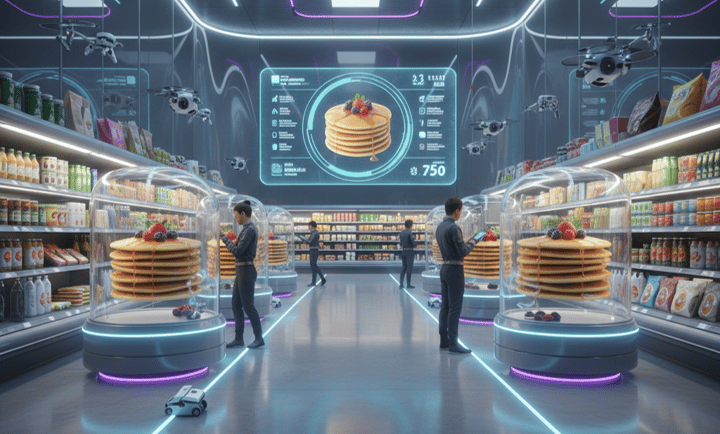
A few weeks ago, I wrapped up my three-part analysis of pancake Consumer Decision Trees (CDTs). I wasn’t planning to add anything else—until a quick trip to my local Publix changed that. Standing in the baking aisle, staring at pancake mix shelved next to brownie batter and sweeteners, I realized a follow-up article was in order.
This one isn’t another CDT breakdown. It’s about store layout strategy—why it matters, how it shapes shopper behavior, and where pancakes fit in. I’ll also explore how these ideas translate to online retail and where large language models (LLMs) could dramatically improve the shopping experience.
Why Store Layout Matters More Than You Think
In a previous position, I spent time designing store layouts to assist with the category management group. That experience shaped much of my perspective today, and many of the observations in this article come from that foundational work rather than a new analysis.
At my local Publix, pancakes and syrups sit squarely in the baking section. From a functional standpoint, it makes sense: pancake and waffle mixes are technically “mixes,” and syrup lives in the sweetener family. But function alone doesn’t always align with shopper behavior.
When we worked on store layouts in the past, the guiding principle was simple:
Group products the shopper naturally buys together.
Not based on how the manufacturer classifies them…
Not based on warehouse logic…
But based on how people actually shop a category.
This approach stands in stark contrast to the old-school strategy of placing staples at opposite ends of the store to force shoppers to walk the full footprint (the classic “milk in one corner, bread in the other” play). Retailers hoped that more walking equaled more impulse purchases.
But today’s shopper is different: they value convenience, speed, and a sense of flow. A layout that reminds them of complementary items—pancake mix + syrup + cereal + toaster pastries—does more than boost sales. It improves the shopper experience, which increases satisfaction, loyalty, and ultimately, basket size.
To be fair, not every Publix is laid out like mine. Some group shelf-stable breakfast products together, which feels far more intuitive from a “breakfast mindset” perspective. And of course, physical layout complexity varies widely depending on store size, traffic flow, aisle width, category adjacencies, and even the demographics of the local trade area.
A Question for the Retailers and Category Teams
So here’s the big question:
Does placing pancakes with other breakfast items resonate more with shoppers than grouping them with baking mixes?
From a shopper-logic standpoint, I’d argue yes—but I’m genuinely curious what others think, especially those who’ve tested it.
For readers working at or with retailers:
Has anyone run controlled experiments on creating a dedicated breakfast zone, and what lift (if any) did you see?
My hypothesis:
Better cross-shop reminders → bigger baskets
Clearer trip missions → improved shopper satisfaction
Intuitive adjacencies → reduced friction for new or infrequent shoppers
But I’d love to hear real-world results.
What Online Retailers Get Right—and Wrong
Brick-and-mortar has limitations that we all accept: you get one physical location for each item. Pancake mix can’t simultaneously live in aisle 3 and aisle 8.
But online?
Online is a sandbox. You can put products in multiple logical locations without a single inch of added shelf space.
A pancake mix can appear in:
Baking → Mixes
Breakfast → Shelf-Stable
“Your Regular Purchases”
“Great for Weekend Mornings”
Bundles → “Breakfast for Four”
Some retailers already do this fairly well. Target, for example, does a good job clustering breakfast staples—but it still stops short of a true breakfast ecosystem. You’ll see pancake mix and syrup together, but not always eggs, refrigerated pancakes, bacon, milk, or orange juice.
Thrive Market steps a little closer by mixing frozen and refrigerated items into breakfast groupings, but even they leave some cross-category opportunities untapped.
From a data-driven perspective, online retailers are missing out if they’re not building dynamic, mission-based aisles around common meal themes like:
Breakfast
Taco Night
Game Day
Baking With Kids
Healthy On-the-Go
Comfort Food Bundles
These “mission aisles” are exactly where digital has an advantage over physical retail.
Where LLMs Fall Short (and How They Could Reinvent Online Grocery)
This brings me to LLMs. I believe they’ll be integrated into online grocery platforms sooner rather than later—but right now, most LLM interfaces feel like using a terminal from 1983.
Everything is text-based.
Everything requires typing.
Everything assumes the shopper wants a conversation rather than a guided experience.
Here’s how it should work:
A shopper could simply ask:
“I’m making a pancake breakfast for my family of four—pancakes, eggs, bacon, and orange juice. Show me items based on my past purchases, and highlight anything on sale.”
A well-integrated LLM should return:
Product options (with images)
Sizes based on prior household consumption
Sales badges
Brand preferences inferred from purchase history
Nutrition swaps (healthier, gluten-free, higher-protein)
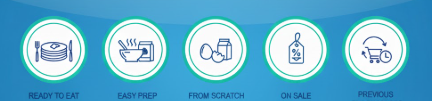
Follow-up questions: For pancakes are you looking for ready to eat (refrigerated or frozen), easy prep (mixes) or from scratch (flour, eggs, milk, etc..)
Estimated total cost
One-click “Add All to Cart” bundles
It should feel less like talking to a chatbot and more like having a digital personal shopper—an AI-powered “mission builder” that assembles the shopping trip the same way a store layout organizes adjacencies.
But we’re not there yet.
Most current LLMs don’t integrate into retailer data ecosystems, don’t understand household trip missions, and can’t recommend items with visual context. That gap represents a massive opportunity for the next wave of retail innovation.
Final Thoughts
Pancake mixes may seem like a small corner of the breakfast world, but they highlight something bigger: the gap between how retail is organized and how shoppers actually think.
Physical stores are constrained by space and legacy layouts.
Online stores are constrained by unimaginative digital taxonomies.
LLMs are constrained by text-only interfaces and lack of retailer integration.
But the future of retail—both in-store and online—will be built around shopper missions, intuitive grouping, and guided experiences that help shoppers remember everything they need without extra effort.
If we can get layouts right, both physical and digital, everyone wins: shoppers spend less time searching, retailers grow baskets, and brands find new opportunities for discovery.

Contact
Contact me for questions, comments, suggestions or anything else!
info@eurekadatalab.com
© 2025. All rights reserved.